
Maruti Suzuki Baleno
Overall Rating

Maruti Suzuki Baleno
Overall Rating
EMI Loading
Maruti Suzuki Baleno Key Specifications
Maruti Suzuki Baleno Highlights

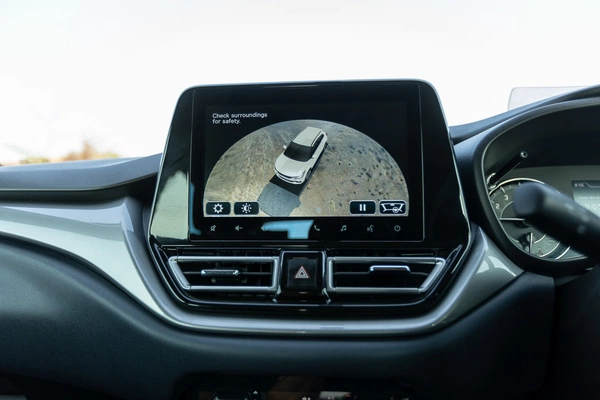
360-degree camera excels in extremely cramped parking situations.
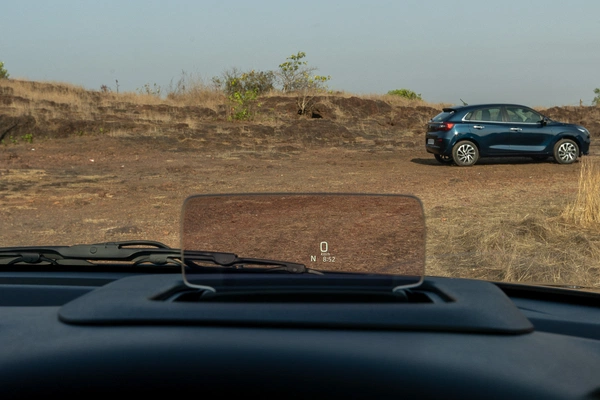
Heads-up display projects key information straight ahead of the driver.
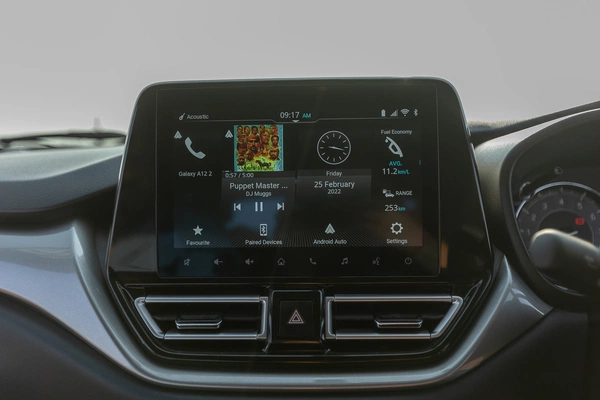
9-inch SmartPlay Pro infotainment is responsive, smooth and user-friendly.
Maruti Suzuki Baleno Overview

The Maruti Suzuki Baleno competing with the Hyundai i20 and Tata Altroz, remains one of the top-selling cars in its Indian segment.
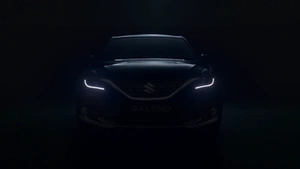
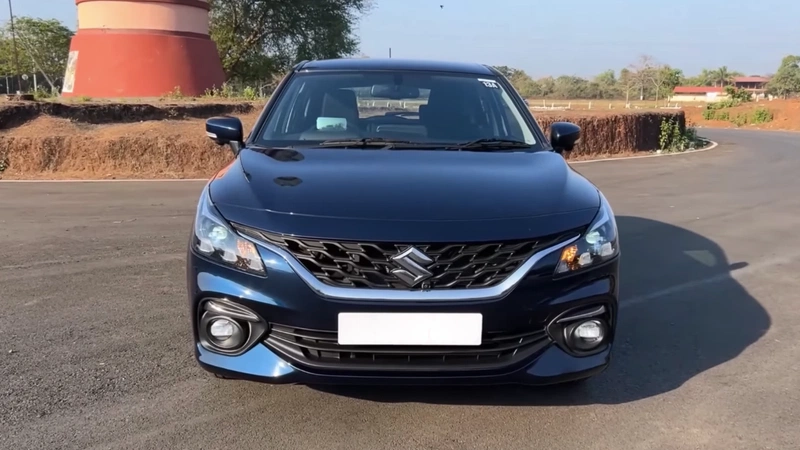
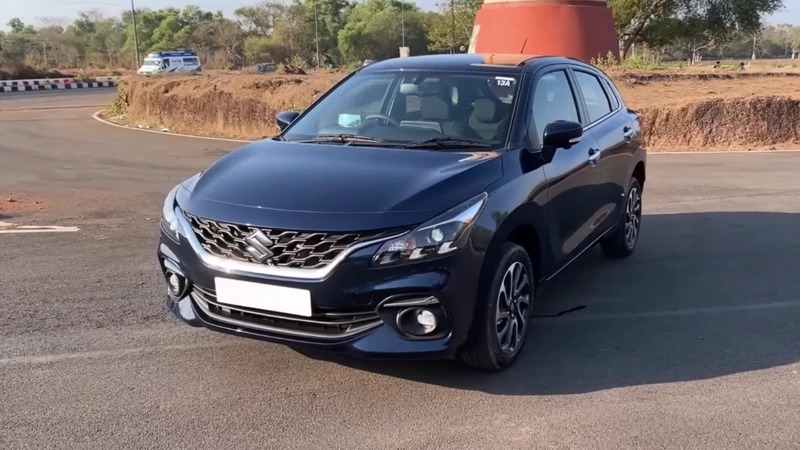
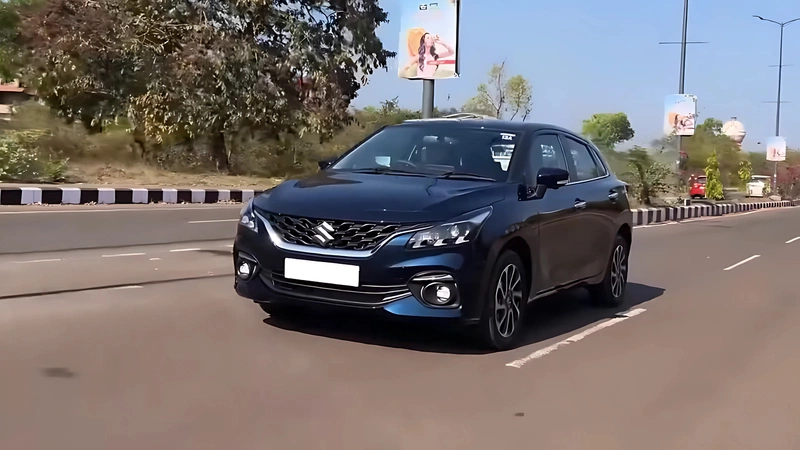
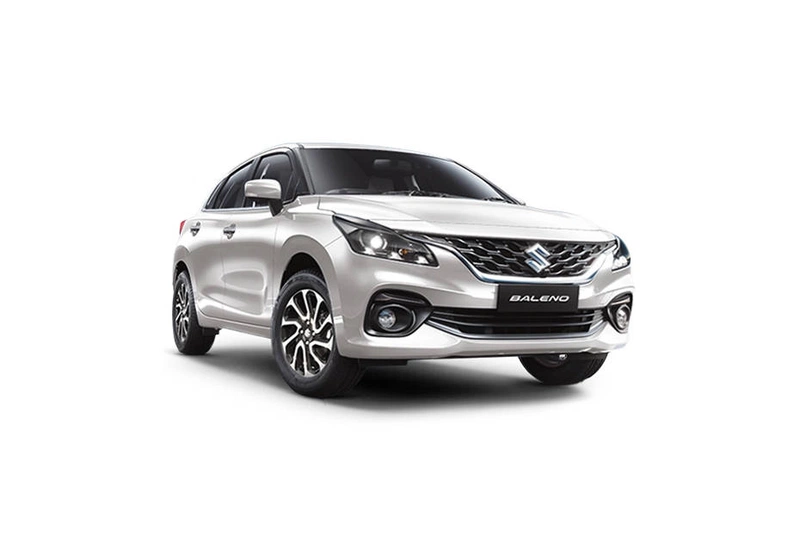
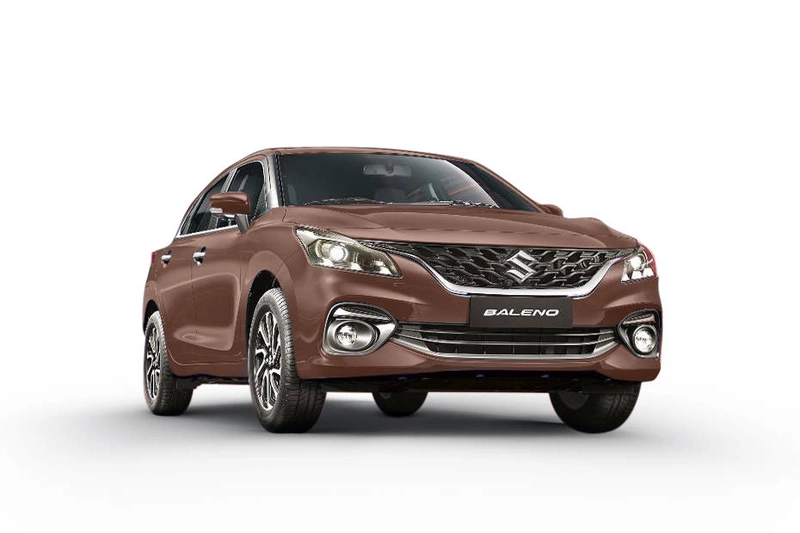
On the outside, it features a wide stance with a prominent shoulder line. It includes bi-functional LED projectors, tri-element DRLs, and L-shaped tail lamps. Also, higher variants offer 16-inch alloy wheels.
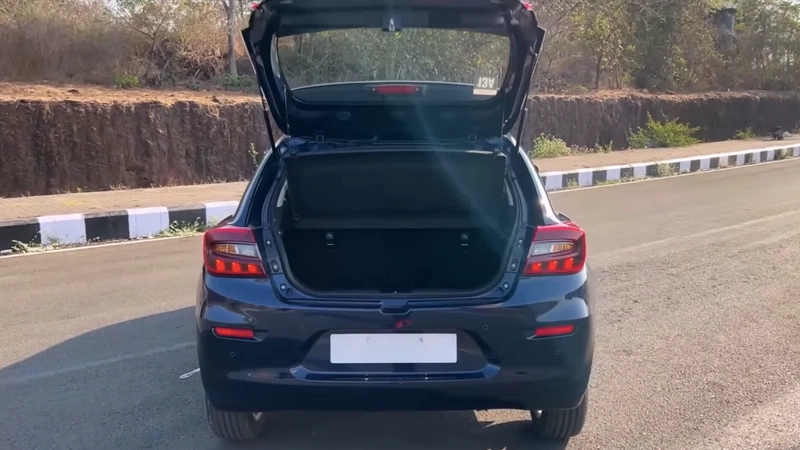
Inside, the five-seater cabin gets a layered black and blue dashboard, housing a 9-inch touchscreen with wireless smartphone integration. Other key features include a head-up display, automatic climate control, along with 318-litre of boot space.
Power comes from a 1.2-litre petrol engine producing 89.7 PS and 113 Nm, available with manual or AMT gearboxes, and claimed mileage from 22.35-22.94 km/l. A CNG variant also exists.
Safety features include six airbags as standard, including a 360-degree camera, ESP with hill hold, and ABS.
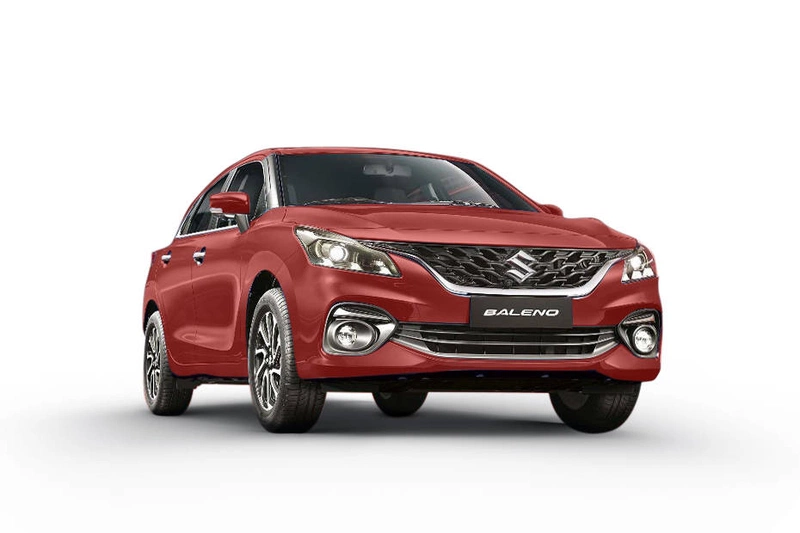
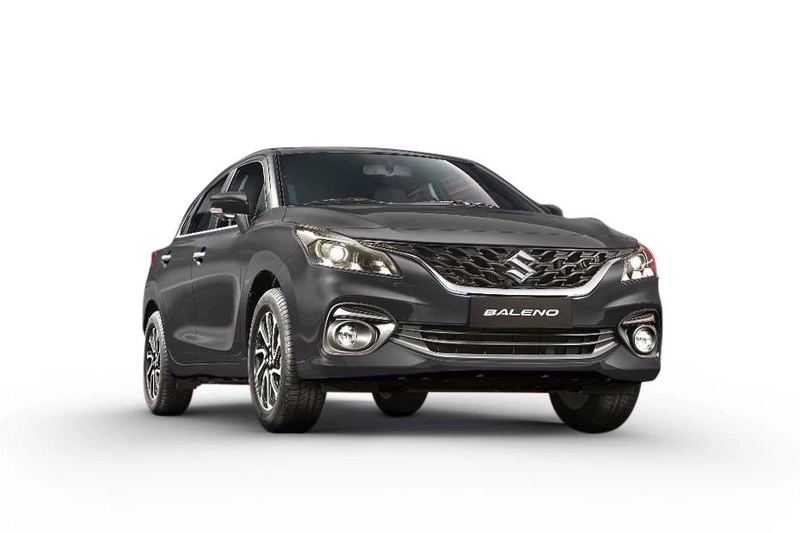
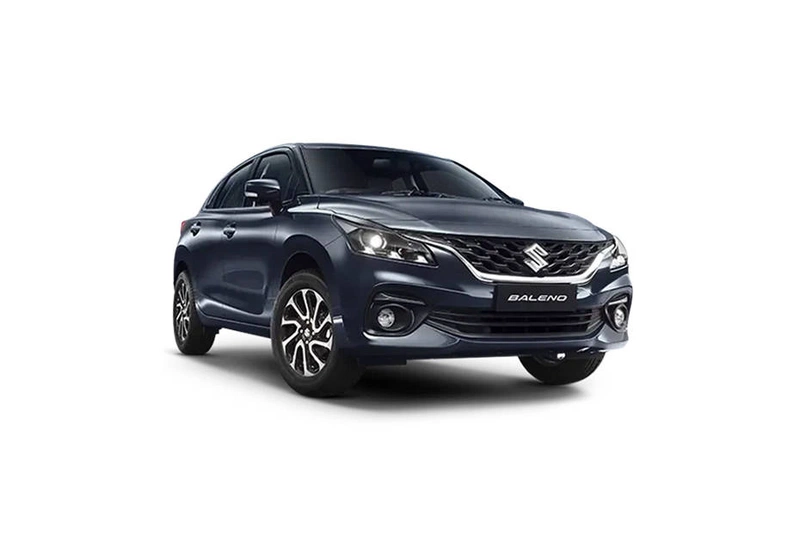
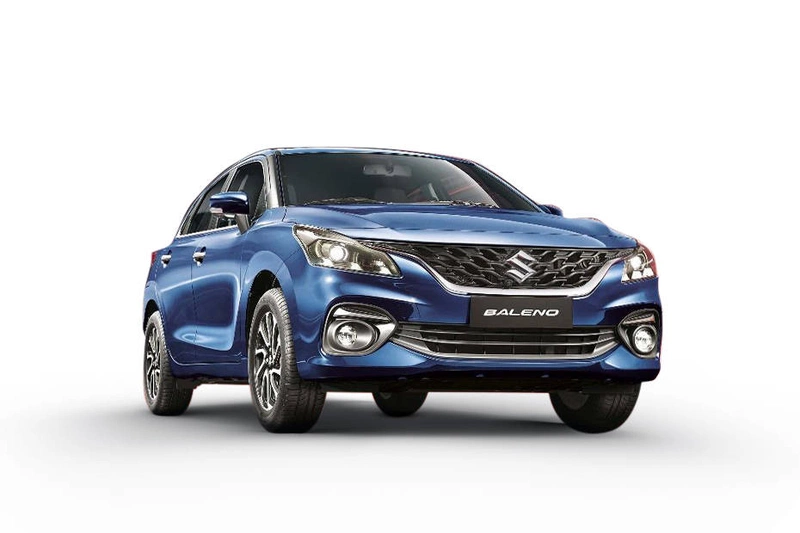
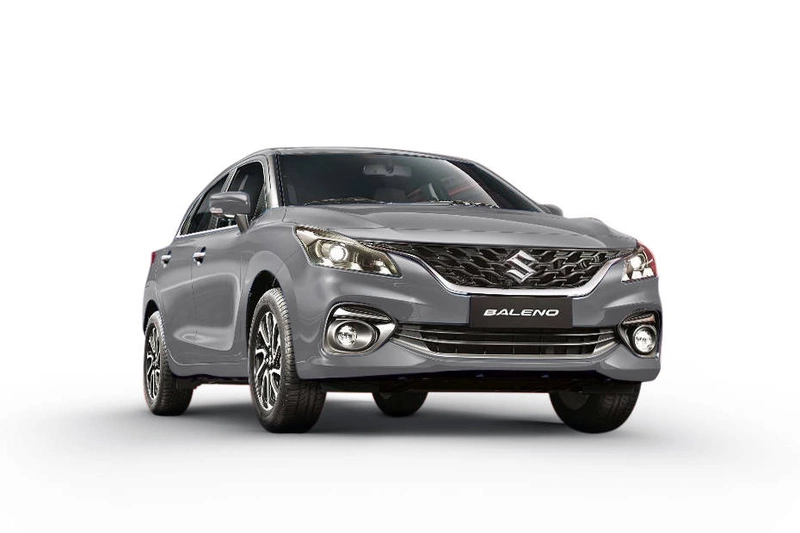
Lastly, exterior colour choices are Nexa Blue, Grandeur Grey, Arctic White, Splendid Silver, Luxe Beige, Opulent Red, and Bluish Black.
Engine and Performance
Engine and Performance
The Baleno is powered by a 1.2-litre K-Series Dual Jet, Dual VVT four-cylinder engine. In petrol configuration, it produces 88.5 bhp (or 89.7 PS) and 113 Nm of torque, with a choice of 5-speed manual or 5-speed AMT transmission.
The CNG variant uses dual-fuel calibration and delivers 76.43 bhp (or 77.5 PS) and 98.5 Nm in CNG mode. It is available only with the 5-speed manual transmission.
fuel economy
fuel economy
ARAI-certified mileage is 22.35 km/l (manual) and 22.94 km/l (AMT) for petrol. The CNG variant returns 30.61 km/kg, offering much lower running costs.
However, trade-offs on CNG are reduced boot space and no split-folding rear seats.
Additionally, Idle Start-Stop (ISS) technology helps reduce fuel consumption in heavy traffic.
interior
interior
The Baleno’s cabin features dual-tone themes, chrome accents, piano-black inserts, and a leather-wrapped steering wheel.
It is equipped with a SmartPlay Pro+ touchscreen infotainment system (9-inch on higher variants, 7-inch on lower variants) supporting wireless Android Auto and Apple CarPlay.
Other features include a head-up display, TFT multi-info display, cruise control, and automatic climate control.
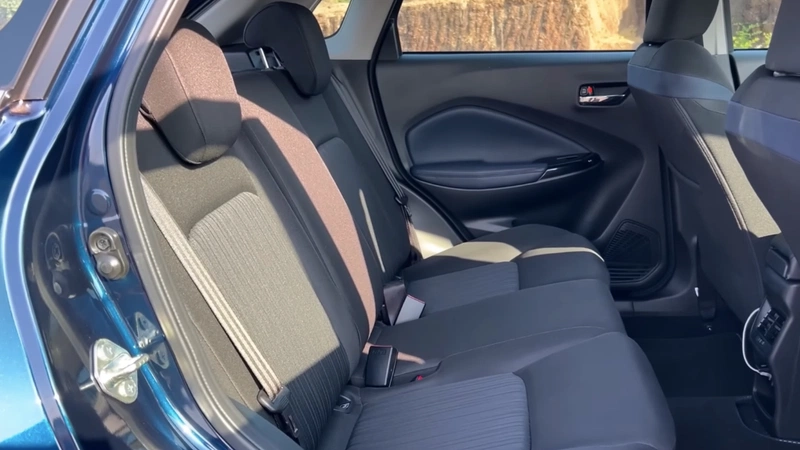
Notably, the seats offer good support with generous legroom and headroom.
Lastly, convenience features include a front armrest, rear AC vents, and USB Type-A & Type-C ports, while the boot space stands at 318 litres.
exterior
exterior
The Baleno follows Maruti NEXA’s “Crafted Futurism” design language with a “Liquid Flow” profile, strong shoulder lines, and sharp creases. It measures 3,990 mm long, 1,745 mm wide, and 1,500 mm tall on a 2,520 mm wheelbase.
The front features the NEXWave grille with chrome elements, LED projector headlamps, and NEXTre’ LED DRLs. Also, the sculpted bumper completes the fascia.
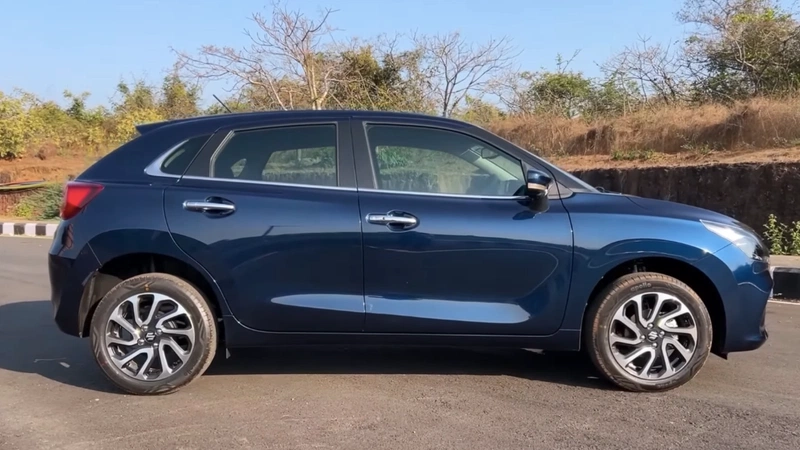
Side profiles show flowing lines and a sloping roofline. Specifically, lower variants get 15-inch steel wheels with covers, meanwhile higher variants feature 16-inch dual-tone alloy wheels.
Door handles and ORVMs are body-coloured with turn indicators.
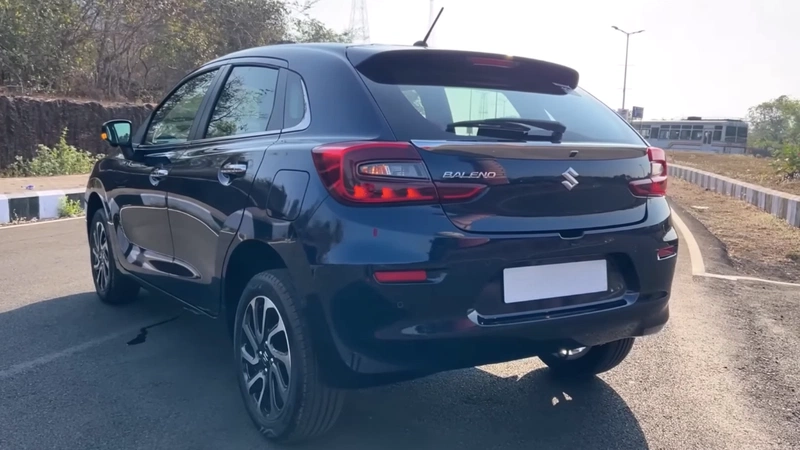
At the rear, NEXTre’ LED tail lamps feature a C-shaped signature, complemented by a rear spoiler and chrome accents.
safety
safety
The Baleno earned a 4-star rating for adult occupant protection, and a 3-star for child occupant protection under Bharat NCAP testing.
Standard safety equipment includes 6 airbags, ABS with EBD, Electronic Stability Control, hill hold assist, rear parking sensors, seatbelt pretensioners with load limiters, and ISOFIX child seat mounts.
Higher trims add a rearview and 360-degree camera.
However, it does not offer ADAS features such as autonomous emergency braking or lane assist.
competition
competition
Hyundai i20 and Tata Altroz are close competitors to the Baleno in its segment.
The i20 offers a larger 10.25-inch touchscreen and a CVT (IVT) automatic on its 1.2-litre petrol variants (a DCT is available only on the N Line turbo model).
However, the Baleno delivers much better fuel efficiency, with ARAI-rated figures of 22.35 km/l (manual) and 22.94 km/l (AMT) compared with the i20's 19-20 km/l range.
It also has lower ownership costs and is available with a factory-fitted CNG option.
The Altroz stands out with a 5-star Bharat NCAP safety rating, six airbags as standard, a larger 345-litre boot, and a wider range of powertrains, including a 1.5-litre diesel.
In return, the Baleno offers lower running costs, better fuel economy overall, and an efficient factory-fitted CNG variant rated at 30.61 km/kg.
Maruti Suzuki Baleno mileage
The Maruti Suzuki Baleno mileage ranges from 22.35 to 22.94 kmpl and 30.61 km/kg. The Manual Petrol variant has an ARAI mileage of 22.35 kmpl. The Automatic Petrol variant has an ARAI mileage of 22.94 kmpl. The Manual CNG variant has an ARAI mileage of 30.61 km/kg.
| Fuel Type | Transmission | ARAI Mileage | * City Mileage | * Highway Mileage |
|---|---|---|---|---|
| Petrol | Manual | 22.35 kmpl | - | - |
| Petrol | Automatic | 22.94 kmpl | - | - |
| CNG | Manual | 30.61 km/kg | - | - |
Maruti Suzuki Baleno News

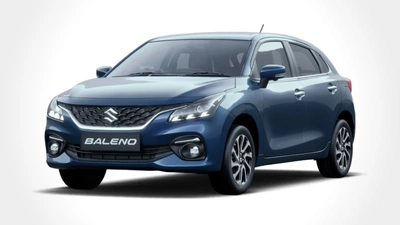
Maruti Suzuki Hikes Car Prices by Up to ₹30,000 in August With Baleno, e Vitara and Jimny Getting Costlier
Maruti Suzuki has increased prices across its Arena and Nexa lineup in August 2026, with hikes ranging from ₹2,500 on entry-level models to as much as ₹30,000 on the Baleno. Here is a full breakdown of what has changed and by how much.
Anmol Kumar
August 19, 2026
Supreme Court Extends Third-Party Insurance for New Cars to 4 Years, Two-Wheelers to 6 Years
The Supreme Court has extended mandatory third-party cover for new cars to four years and two-wheelers to six, overriding IRDAI's own recommendation, as 56 per cent of vehicles on Indian roads remain uninsured.
Anmol Kumar
August 5, 2026



Maruti Suzuki Baleno FAQs
Does the Baleno get automatic transmission?
−Yes, the 5-speed AMT (Auto Gear Shift) is available on all petrol variants except the base. The CNG variant is manual-only.
How many airbags does the Baleno have, and are they standard across all variants?
+All variants get 6 airbags, front, side, and curtain as standard equipment.
What is the boot space of Baleno?
+The petrol variants offer 318 litres of boot space. The CNG variant's boot is occupied by the gas cylinder, so usable space is significantly reduced.
Does Baleno support wireless Android Auto and Apple CarPlay?
+Wireless Android Auto and Apple CarPlay are available on top variants, equipped with the 9-inch SmartPlay Pro+ infotainment system.
What is the fuel efficiency of the Baleno CNG variant?
+The S-CNG variant is ARAI-certified at 30.61 km/kg, which translates to considerably lower per-kilometre running costs compared to the petrol variants.
Is the rear seat split-foldable in the Baleno?
+Yes, but availability depends on the variant. The 60:40 split-folding rear seat is not available on the Sigma. It is standard on the Zeta, Zeta CNG and Alpha variants, while on the Delta it is available only with the CNG version. The Delta petrol (manual and AMT) does not get this feature.
Is the Maruti Suzuki Baleno available in petrol, CNG, electric or diesel engines?
+The Baleno is currently available with Petrol and CNG engines.
What are the key safety features in the Baleno ?
+The Baleno comes equipped with several safety features including Anti-lock Braking System (ABS), Central Locking, Electronic Brakeforce Distribution (EBD), Electronic Stability Control (ESC), Speed Alert and Hill Assist.
What are the boot space and dimensions of the Maruti Suzuki Baleno?
+The Baleno offers 318 Litres of boot space. Its dimensions are 3990 mm in length, 1745 mm in width, and it has a wheelbase of 2520 mm.
What colours does the Maruti Suzuki Baleno come in?
+The Maruti Suzuki Baleno is available in the following colours: Pearl Arctic White, Opulent Red, Grandeur Grey, Luxe Beige, Bluish Black, Nexa Blue and Splendid Silver.