Skoda Peaq: Could Local Production Make It the Ideal Rival to Mahindra's Born EVs?
By Arjun Nair
Published June 24, 2026
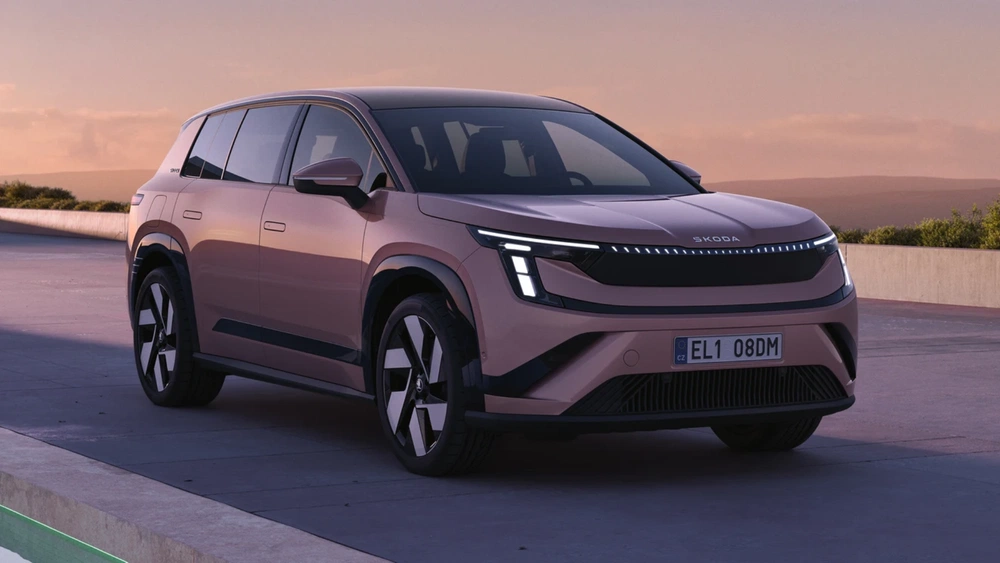
The electric SUV segment in India is heating up fast. Mahindra has taken a strong lead with its Born Electric vehicles like the BE 6, XEV 9E, and XEV 9S.
Now, Skoda has globally unveiled its new flagship 7-seater electric SUV, the Peaq, with the carmaker evaluating it for the Indian market. Though, this will most likely be through the CBU (completely built unit) or CKD (completely knocked down) route at most.
However, at a time when new buyers want a premium feel without sky-high prices, a localised, made-in-India Peaq could shake things up.
The Skoda Peaq is built on the Volkswagen Group's MEB platform. It stands out with its near-five-metre length, impressive range claims of over 600 km in top variants, and a focus on comfort and practicality.
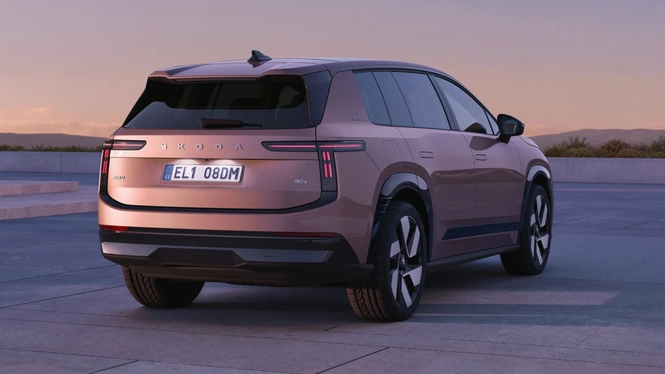
In the UK, prices start around 51,980 pounds, which works out to roughly Rs 65 lakh before taxes and duties. That sounds expensive for India, but local production could change the game completely. With higher localisation levels, costs could drop significantly, potentially bringing it down to around Rs 35 lakh or even lower, making it a strong contender in the premium family EV space.
Also Read - 2026 Skoda Kodiaq Every Variant Explained
Of course, localisation alone may not be enough, and some higher-end features like advanced massage seats, the premium Sonos audio system, or certain tech options might need to be simplified or removed to hit those price points. But the car's core strengths and overall packaging could stay intact.
If this comes to fruition, the Peaq would line up directly against the Mahindra XEV 9S, another 7-seater electric SUV aimed at Indian families who want space, range, and modern features without compromising on daily usability.
Skoda Peaq vs Mahindra XEV 9S
Both these SUVs target similar buyers. The Peaq feels more premium in its European positioning, while the XEV 9S plays to Indian strengths like value, ground clearance, and feature-loaded interiors at more competitive prices.
Dimensions and Space
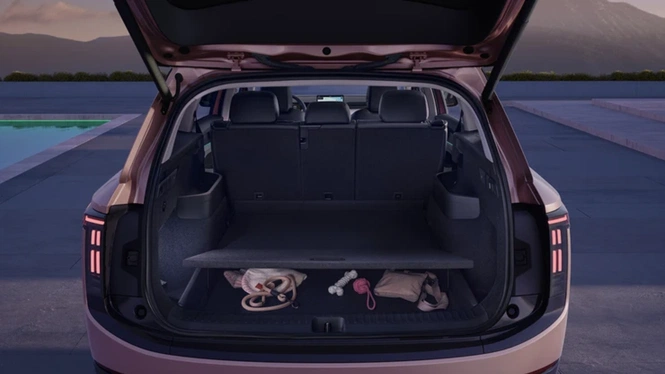
The Skoda Peaq measures about 4,874 mm in length with a long wheelbase of 2,965 mm. This gives it a genuine flagship presence and excellent cabin room, especially in the second and third rows. The five-seater version boasts a class-leading 935 litres of boot space.
In contrast, the Mahindra XEV 9S is slightly more compact at 4,737 mm long with a 2,762 mm wheelbase. It still offers good family space and a practical 527-litre boot (with seats folded), plus a useful frunk.
The Peaq's extra length and wheelbase could translate to more legroom and a more planted highway feel, but the XEV 9S has higher ground clearance (around 205-219 mm unladen), which suits our roads better.
Features and Tech
The Peaq gets bidirectional charging (V2L/V2H), which is great for powering gadgets or even home use during power cuts. The XEV 9S only offers V2L.
Both SUVs pack modern tech like large screens, ADAS, and connected features, but the Peaq's augmented reality head-up display and premium audio, if retained, could stand out.
Battery and Range
This is where things get interesting. The Peaq offers battery options around 63 kWh (for over 460 km WLTP) and 91 kWh gross (86 kWh usable, delivering over 600 km WLTP in suitable variants). Fast charging is strong, with 10-80% in about 28 minutes.
The XEV 9S comes with 59 kWh, 70 kWh, and 79 kWh LFP (Lithium Iron Phosphate) packs, claiming ARAI ranges up to 679 km on the biggest battery. Real-world figures stand between 450 - 510 km for the 79 kWh pack. Both SUVs promise solid highway capability.
The Peaq's NMC (Lithium Nickel Manganese Cobalt) chemistry might offer better energy density and cold-weather performance, while Mahindra's LFP is known for safety, longevity, and potentially lower costs in India.
Power and Performance
The Peaq has variants with single-motor RWD (around 150-210 kW / 201-282 hp) and a dual-motor AWD option up to 220 kW (about 299 hp) with up to 540 Nm of torque. Acceleration for the top model is around 6.7 seconds to 100 km/h.
The XEV 9S is RWD-only, with the 79 kWh version offering 282 hp and 380 Nm, offering quick performance suited to Indian conditions.
The Peaq's optional AWD could provide better traction in rain or light off-road scenarios.
Here is a quick comparison table of key specs (based on available global/Indian data for top comparable variants):
| Value | Skoda Peaq (Top Variants) | Mahindra XEV 9S (79 kWh) |
|---|---|---|
| Length / Wheelbase | ~4,874 mm / 2,965 mm | 4,737 mm / 2,762 mm |
| Height / Ground Clearance | ~1,664 mm / ~183 mm | ~1,747 mm / 205-219 mm |
| Seating | 5/7 | 7 |
| Battery Options | 63 kWh, 91 kWh gross (~86 kWh usable) | 59, 70, 79 kWh |
| Power (Top) | Up to 220 kW (~299 hp) | 210 kW (~282 hp) |
| Torque (Top) | Up to ~540 Nm | 380 Nm |
| Claimed Range | >600 km (WLTP, larger battery) | Up to 679 km (ARAI) |
| Fast Charging | 10-80% in ~28 min (200 kW) | Competitive (~20 min 20-80%) |
| Drivetrain | RWD / Optional AWD | RWD |
Also Read - Every Electric Three Row SUV On Sale Under Rs 65 Lakh
Potential Advantages of a Localised Skoda Peaq
A locally produced Skoda Peaq would bring superior build quality and a premium feel that many Indian buyers appreciate. Skoda has a strong reputation for solid engineering and thoughtful features such as umbrella holders, ice scrapers, and flexible storage solutions.
The Peaq's lounge-like interior with options like a panoramic roof and advanced comfort features could appeal to families who want a more upmarket experience. Its range and efficiency might give it an edge in real-world highway driving thanks to the larger battery and platform optimisation.
Skoda would also offer a significantly more premium service experience as compared to Mahindra, whose experience is often a hit or a miss.
Additionally, the Skoda brand's European heritage could attract customers looking for a step above regular mass-market options. The optional all-wheel drive system would also prove useful for those living in hilly areas or wanting extra confidence during the monsoon.
The biggest advantage from this localisation however will be its significantly lower price.
Also Read - How India is Turning into a Major Export Hub for Automobile Manufacturers
Possible Challenges
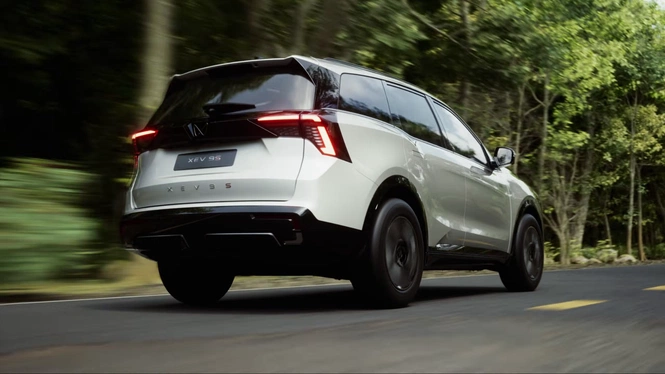
Even if priced around Rs 35 lakh, the Peaq would need to strongly justify its cost against the more affordable XEV 9S, which starts just under Rs 20 lakh ex-showroom for base variants.
Moreover, to achieve an aggressive pricing, some luxury features might have to be removed, which could reduce the flagship appeal. Finally, Mahindra's LFP battery offers greater peace of mind on longevity and addresses common concerns about fire safety in India.
While likely to be better in after-sales service experience and quality, Skoda's network is not as widespread as Mahindra's yet, which could be a concern for family buyers who need reliable support across the country.
Also Read - 2026 Mahindra XEV 9S Every Variant Explained
The Mahindra XEV 9S despite being a fairly recent launch, has started to establish itself with its aggressive pricing and family-focused design. A locally produced Skoda Peaq could elevate the entire segment by bringing European refinement at accessible prices.
Ultimately, the Peaq's success will depend on the direction Skoda takes for its production, final pricing, real-world performance, after-sales support, and how well Skoda adapts the car to Indian needs.
Image Credits: Skoda, Mahindra
Table of Contents
- Skoda Peaq vs Mahindra XEV 9S
- Potential Advantages of a Localised Skoda Peaq
- Possible Challenges
Join the Conversation
Trending

Safest Cars Under ₹10 Lakhs
The Honda Amaze is the latest entrant to score the ubiquitous 5-star safety rating
Salil Kumar
July 29, 2026

Safest Cars In India To Buy in 2026
Here is every car tested by Bharat NCAP since its inception
Salil Kumar
July 29, 2026
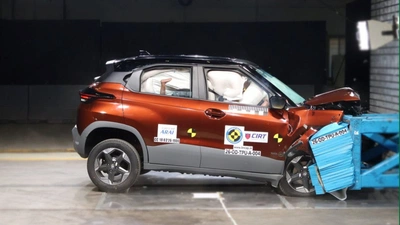
Tata Punch EV Awarded 5 Stars In Latest Bharat NCAP Crash Tests
The pre-facelift Punch EV was already 5-star rated, and the current model continues the same.
Arjun Nair
July 29, 2026
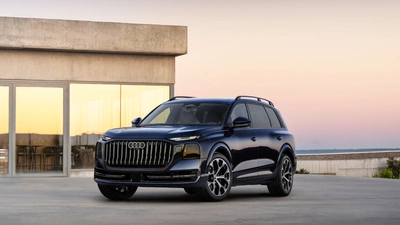
Audi Expands SUV Range With The All-New Flagship Q9
Audi Q9 launched as the brand’s biggest flagship three-row SUV.
Arjun Nair
July 29, 2026

Toyota Hilux Launched at Rs 31.99 Lakh, Gets First-Ever 4x2 and New 12.3-Inch Screen
Toyota has launched the ninth-generation Hilux in India at Rs 31.99 lakh (ex-showroom). Three variants, a new cabin with a 12.3-inch touchscreen, a first-ever 4x2 option, and the same proven 2.8-litre diesel. Here is everything you need to know.
Anmol Kumar
July 29, 2026
Featured
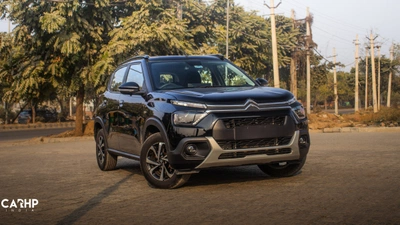
Citroen C3 Review: Who Should Consider This Car?
A few days ago, I took the Citroen C3X out for a spin in the city and on the highways. I travelled long distances and checked its fuel efficiency, features, comfort, and other factors. Today, I’ll briefly share my overall experience with the C3X and will tell you whether you should consider it or not and which is the most value-for-money variant of the lot.
Vatsal Agrawal
May 19, 2026
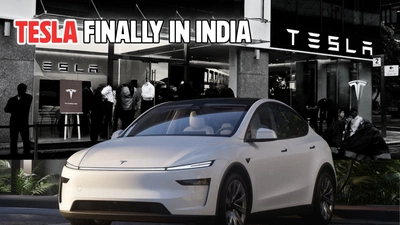
Tesla Finally In India Officially. Why Now And What Does It Mean For EVs?
The much-anticipated 2025 Tesla Model Y has officially arrived in India, marking a pivotal moment for the nation's burgeoning electric vehicle market. Launched on July 15, 2025, the Model Y Juniper facelift offers cutting-edge technology, impressive range, and signature Tesla performance. Positioned as a premium electric SUV, its entry will intensify competition and reshape consumer expectations for EVs across the subcontinent.
Charan Narain
July 17, 2025
Here Are 10 Things The Harrier.EV Offers That The Mahindra XEV 9E Doesn't
The Harrier.EV is an incredible new offer from Tata. Its most popular competitor would be the Mahindra XEV 9E, priced similarly. With these two incredible offerings from home grown brands available, here is a list of everything the Harrier.EV offers that the XEV 9E doesn't.
Charan Narain
June 13, 2025
Write a comment
Comments
No comments yet. Be the first to comment!