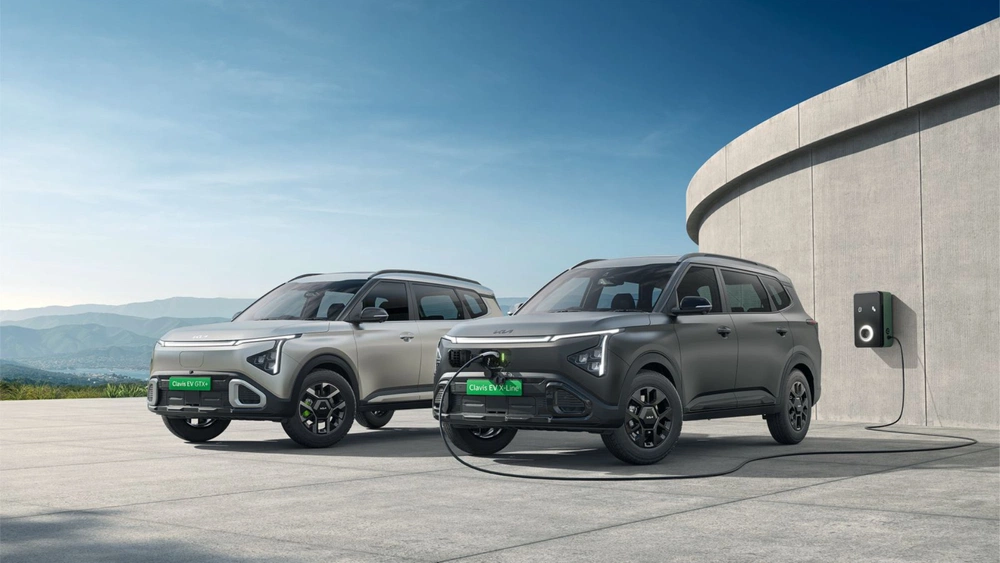
After Maruti Suzuki and MG, Kia is the third carmaker to introduce a BaaS scheme for its EV portfolio, particularly for the Carens Clavis EV.
What Exactly is Kia’s BaaS Model?
Instead of bundling the battery cost into the vehicle price like a conventional EV purchase, Kia’s BaaS model separates the battery and chassis financing into two individual loan accounts. In simple terms, buyers finance the car body separately while paying a usage-based battery repayment charge.
This significantly reduces the upfront cost of the vehicle, which is often the biggest hurdle for EV buyers in India. Rather than paying the entire battery cost at the time of purchase, customers pay Rs 3.3 per kilometre as part of the battery plan.
Also Read- Maruti Suzuki E-Vitara BaaS Explained
Kia says ownership of the Carens Clavis EV under this program starts from Rs 51,520, making the initial acquisition cost appear far more approachable than a traditional full-payment EV purchase.
| Pack | Ex-Showroom Price | Starting Down Payment | Chassis Price | EMI Starts From | Battery Charge | Loan Tenure |
|---|---|---|---|---|---|---|
| Standard | Rs 17.99 lakh | Rs 51,520 | Rs 12.84 lakh | Rs 26,650 | Rs 3.3/km | Body: 60 months, Battery: 96 months |
| Extended | Rs 21.99 lakh | Rs 60,452 | Rs 15.94 lakh | Rs 33,099 | Rs 3.3/km | Body: 60 months, Battery: 96 months |
The finance structure also offers longer repayment flexibility for the battery pack. While the vehicle loan can stretch up to 60 months, the battery repayment tenure goes up to 96 months.
They have partnered with ICICI Bank, HDFC Bank, Axis Bank, Kotak Mahindra Bank, and Bajaj Finserv.
Kia also claims that through the K-Charge platform integrated into the MyKia app, users can access more than 15,000 charging points nationwide. Additionally, over 100 Kia dealerships now feature DC fast chargers, while more than 267 workshops across India are EV-ready.
The Kia Carens Clavis EV comes with two battery pack options, a 42 kWh unit and a larger 51.4 kWh pack, offering a claimed range of up to 490 km. Power output goes up to 169 bhp and 255 Nm torque, making it one of the more powerful family EVs in its segment. It supports 100 kW DC fast charging, capable of charging from 10 to 80 percent in around 39 minutes.
Feature highlights include dual 12.25-inch panoramic displays, Level 2 ADAS, ventilated front seats, panoramic sunroof, Bose audio system, V2L support, regenerative braking with i-Pedal mode, connected car tech, and both 6- and 7-seater layouts.
Kia Carens Clavis EV vs Maruti Suzuki E-Vitara BaaS Model Compared
| Detail | Maruti Suzuki eVitara | Kia Carens Clavis EV |
|---|---|---|
| Base Variant | Delta | Standard |
| Battery | 49 kWh | 42 KWh |
| Price with Battery | ₹15.99 lakh | ₹17.99 lakh |
| BaaS / Chassis Price | ₹10.99 lakh | ₹12.84 lakh |
| Battery Rental Fee | ₹3.99/km | ₹3.3/km |
| Claimed Range | 440 km | Up to 490 km |
| Motor Power | 141 hp | 133 hp |
| Torque | 193 Nm | 255 Nm |
| Claimed Range | 443 km | 404 km |
| Drive Type | Front-Wheel Drive | Front-Wheel Drive |
| AC Charging | 7.2 kW | 7.4 kW |
| DC Fast Charging | 70 kW | 100 kW |
| 10-80% Fast Charging Time | Around 50 min | Around 39 min |
Maruti Suzuki’s eVitara BaaS model is clearly more aggressive in reducing the sticker price upfront. The base Delta variant drops from ₹15.99 lakh to just ₹10.99 lakh under the battery subscription model, while even the top Alpha trim falls to ₹14.29 lakh.
However, buyers must pay battery rental charges between ₹3.99/km and ₹4.39/km depending on the variant.
Also Read- Best EVs Under ₹20 Lakh in India With 300 KM Of Real World Range
The Standard pack starts at ₹17.99 lakh, with a chassis price of ₹12.84 lakh (1.84 lakhs more than cheapest E-Vitara) and battery usage charged separately at ₹3.3/km. The higher Extended pack is priced at ₹21.99 lakh, with a chassis price of ₹15.94 lakh.
Compared to Maruti, Kia’s per-kilometre battery fee is lower at ₹3.3/km for both models. Kia and Maruti has given 8 years battery warranty as standard, but Maruti benefits form vastly more accessible dealer network.
Table of Contents
- What Exactly is Kia’s BaaS Model?
- Pricing, EMI and Loan Structure
Join the Conversation
Trending

Safest Cars Under ₹10 Lakhs
The Honda Amaze is the latest entrant to score the ubiquitous 5-star safety rating
Salil Kumar
July 29, 2026

Safest Cars In India To Buy in 2026
Here is every car tested by Bharat NCAP since its inception
Salil Kumar
July 29, 2026
Tata Punch EV Awarded 5 Stars In Latest Bharat NCAP Crash Tests
The pre-facelift Punch EV was already 5-star rated, and the current model continues the same.
Arjun Nair
July 29, 2026
Audi Expands SUV Range With The All-New Flagship Q9
Audi Q9 launched as the brand’s biggest flagship three-row SUV.
Arjun Nair
July 29, 2026

Toyota Hilux Launched at Rs 31.99 Lakh, Gets First-Ever 4x2 and New 12.3-Inch Screen
Toyota has launched the ninth-generation Hilux in India at Rs 31.99 lakh (ex-showroom). Three variants, a new cabin with a 12.3-inch touchscreen, a first-ever 4x2 option, and the same proven 2.8-litre diesel. Here is everything you need to know.
Anmol Kumar
July 29, 2026
Featured
Citroen C3 Review: Who Should Consider This Car?
A few days ago, I took the Citroen C3X out for a spin in the city and on the highways. I travelled long distances and checked its fuel efficiency, features, comfort, and other factors. Today, I’ll briefly share my overall experience with the C3X and will tell you whether you should consider it or not and which is the most value-for-money variant of the lot.
Vatsal Agrawal
May 19, 2026
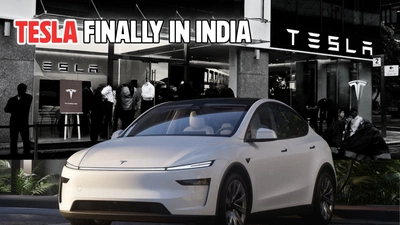
Tesla Finally In India Officially. Why Now And What Does It Mean For EVs?
The much-anticipated 2025 Tesla Model Y has officially arrived in India, marking a pivotal moment for the nation's burgeoning electric vehicle market. Launched on July 15, 2025, the Model Y Juniper facelift offers cutting-edge technology, impressive range, and signature Tesla performance. Positioned as a premium electric SUV, its entry will intensify competition and reshape consumer expectations for EVs across the subcontinent.
Charan Narain
July 17, 2025
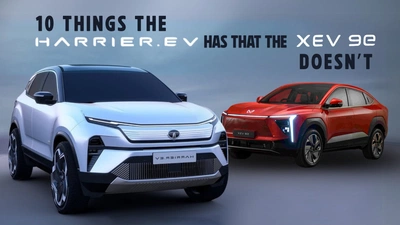
Here Are 10 Things The Harrier.EV Offers That The Mahindra XEV 9E Doesn't
The Harrier.EV is an incredible new offer from Tata. Its most popular competitor would be the Mahindra XEV 9E, priced similarly. With these two incredible offerings from home grown brands available, here is a list of everything the Harrier.EV offers that the XEV 9E doesn't.
Charan Narain
June 13, 2025
Write a comment
Comments
No comments yet. Be the first to comment!