Winters in India can be surprisingly hard on cars. Cold weather affects batteries, tyres, visibility, and even engine performance. With some timely attention, you can avoid breakdowns and keep your car healthy all winter.
1. Upgrade to Aftermarket Lights
If you drive a budget or mid-range car, chances are it came with weak halogen bulbs that struggle during Delhi’s notorious smog season. By late November, visibility can drop below 20 metres in NCR and Punjab highways. Upgrading to projector or LED headlights makes a huge difference.
You’ll find good options from Osram, Philips, and Hella in the ₹3,000–₹8,000 range. Some brands like Maruti Suzuki and Hyundai now sell official fog lamp kits as accessories that won’t void warranty. Choose white or warm yellow light depending on how foggy your area gets , yellow cuts through dense fog better.
2. Air and Cabin Filters
During December–January, AQI levels in north India can cross 500. That means your car’s cabin filter is fighting a losing battle. Replace it before the season starts.
If your car has a built-in air purifier (like in some MG, Hyundai, or Toyota models), clean or replace its filters before November. In older models, consider installing a portable in-car air purifier from brands like Sharp or Honeywell. They cost around ₹6,000 but make long commutes in smoggy conditions much safer for your lungs.
3. Battery Health
Low temperatures and fog can slow battery reactions, making it harder to crank the engine in the morning. Cars parked outside overnight in places like Shimla, Nainital, or Chandigarh often fail to start.
Open the bonnet and inspect the terminals. If you notice a green or white powdery deposit, clean it using a mix of baking soda and water. Tighten all terminals properly.
If your battery is more than three years old, get it tested. Most service centres will do it for free. Avoid using accessories like cabin lights or the infotainment system when the engine is off.
In extremely cold regions, you can wrap the battery in an insulating jacket or blanket to maintain temperature. In Delhi’s polluted air, check for rusting around the clamps and terminals every few weeks.
4. Tyres and Grip
Cold air reduces tyre pressure, which increases wear and reduces control. A 2 PSI drop is common in winter mornings. Check your tyre pressure weekly and keep it as per the sticker on your door frame (usually 30–35 PSI).
To test tread depth, use a one-rupee coin — if the outer ring is visible, replace the tyres. Smooth tyres are dangerous on wet or foggy highways, especially during early morning dew.
If you plan to drive to snow-prone areas like Manali or Narkanda, switch to all-terrain tyres for better traction. And don’t forget to rotate them every 8,000–10,000 km to maintain even wear.
5. Visibility and Wipers
Fog, dew, and pollution residue can quickly make your windshield hazy. Old wipers worsen the problem, leaving streaks that scatter oncoming light.
Replace wiper blades every 6–12 months and use washer fluid with antifreeze additives if you live in colder climates. Never use plain water, as it can freeze or cause mineral buildup.
Keep headlights, taillights, and fog lamps clean — a thin film of dust or pollution can cut brightness by nearly 40 percent.
If your defogger isn’t working, turn the AC to the lowest temperature with the air circulation off. These clears fog quickly.
6. Engine and Fluids
Avoid revving a cold engine. Let it idle for a minute so the oil circulates properly something that Maruti also recommends. Use the manufacturer-recommended oil grade. Most modern cars in India can run fine on standard 5W-30 or 0W-20 oils, but in sub-zero areas like Leh or Gulmarg, you may need a thinner grade.
Check coolant levels and top up with the correct mix of antifreeze and water (usually 50:50). Don’t pour pure water into the radiator during winter it can freeze and crack components.
7. Brakes and Steering
Brake performance can vary in cold and wet conditions. Check the brake pads and replace them if they are thinner than 3 mm.
If the steering feels hard, it might be due to thickened power steering fluid. Ask your mechanic to inspect it during the pre-winter service.
Get your wheel alignment checked if the car drifts to one side, especially after hitting winter potholes or speed breakers hidden under fog. In hilly terrain, always ensure ABS and traction control are functional.
8. Emergency Kit
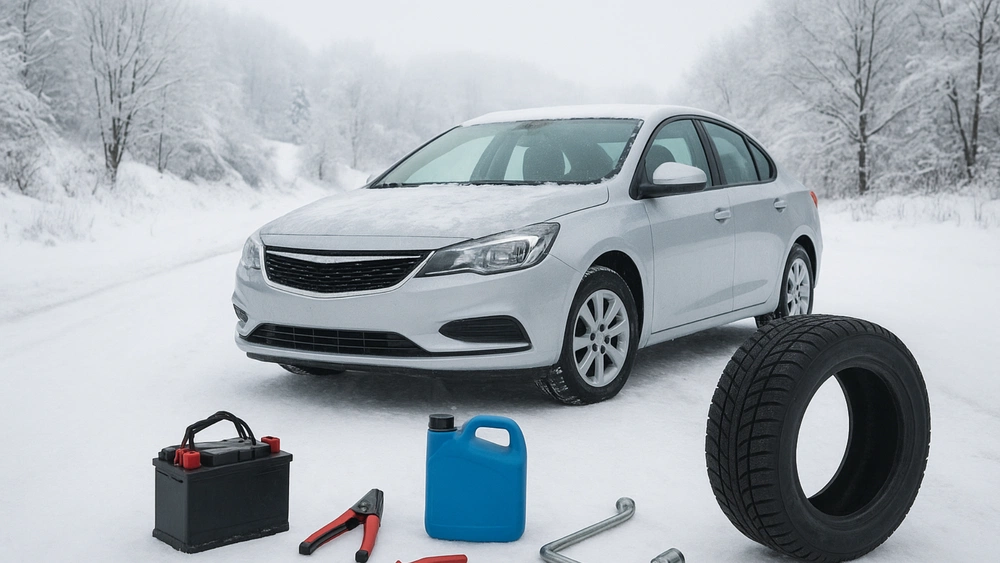
Every car should carry a winter emergency kit. Pack jumper cables, a flashlight with spare batteries, a first-aid kit, a thick blanket, and gloves. Include a tyre repair kit, small air compressor, and emergency sealant — all of which fit easily in the boot.
Add high-energy snacks, a bottle of water, and a charged power bank. In the mountains, always keep a small shovel and traction mats in case of light snow.
9. Drive Smart
Dense fog and poor visibility can turn highways into danger zones. Always use low-beam headlights. Keep a gap of at least 4–5 seconds from the car ahead. If visibility drops below 50 metres, slow down steadily — never brake suddenly. If the car has we or snow mode keep it it on as it makes traction and ABS more pro-active while taming throttle input.
Use hazard lights only if you are stationary or driving below 20 km/h on an empty stretch.a
Check weather and traffic updates before early morning or late-night trips. During dense fog, lightly honk at intervals and keep some background music on to alert nearby drivers of your presence it works better than people think
Write a comment
Comments
No comments yet. Be the first to comment!
Trending
Here is How Much Petrol, Diesel And CNG Prices Have Gone Up Since May
India's Sudden Fuel Price Hike Explained
Salil Kumar
May 26, 2026
Diesel Cars DPF Issues And How To Solve Them As Per Experts
Mahindra Diesel Cars DPF Problems Explained
Salil Kumar
May 18, 2026
Featured
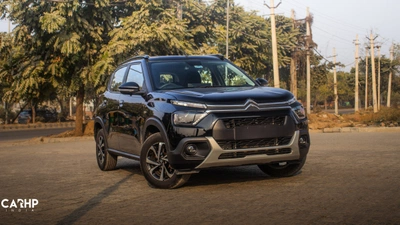
Citroen C3 Review: Who Should Consider This Car?
A few days ago, I took the Citroen C3X out for a spin in the city and on the highways. I travelled long distances and checked its fuel efficiency, features, comfort, and other factors. Today, I’ll briefly share my overall experience with the C3X and will tell you whether you should consider it or not and which is the most value-for-money variant of the lot.
Vatsal Agrawal
May 19, 2026
Tesla Finally In India Officially. Why Now And What Does It Mean For EVs?
The much-anticipated 2025 Tesla Model Y has officially arrived in India, marking a pivotal moment for the nation's burgeoning electric vehicle market. Launched on July 15, 2025, the Model Y Juniper facelift offers cutting-edge technology, impressive range, and signature Tesla performance. Positioned as a premium electric SUV, its entry will intensify competition and reshape consumer expectations for EVs across the subcontinent.
Charan Narain
July 17, 2025
Here Are 10 Things The Harrier.EV Offers That The Mahindra XEV 9E Doesn't
The Harrier.EV is an incredible new offer from Tata. Its most popular competitor would be the Mahindra XEV 9E, priced similarly. With these two incredible offerings from home grown brands available, here is a list of everything the Harrier.EV offers that the XEV 9E doesn't.
Charan Narain
June 13, 2025