
Table of Contents
- What is DPF Filter?
- What Is DPF Regeneration?
- What happens when DPF Lamp is illuminated?
- What Can You Do To Prevent DPF Issues?
So many Mahindra buyers are pretty on the edge when it comes to the DPF. This little piece is what collects that black soot when you floor a diesel car to keep emissions in check, but it requires frequent maintenance.
Recently, a YouTuber DDS posted an interview with a Mahindra tech(timestamped) who detailed quite a few insightful points regarding the DPF in Mahindra vehicles.
After watching their very helpful interview multiple times, here is what I could gather from the short but extremely informative interview.
This is specific to Mahindra vehicles (official explainer here) but can be considered for to every BS6 diesel vehicle in general. As usual, let me know in the comments if you have any doubts.
What is DPF Filter?
DPF or diesel particulate filter is a must for every BS6 compatible car. It catches the unburnt particles of diesel fuel, also called soot. The replacement of the DPF is quite costly and ranges from 1 to 2 lakhs.
What Is DPF Regeneration?
DPF regeneration is a process in which the accumulated soot mass in DPF is burned off once the temperature of exhaust gas reaches sufficiently high enough. I do not know the exact temperature in case of Mahindra, but anywhere between 600–700 degrees is required as far as I can recall from my automobile engineering lectures.
There are two types of regenerations: automatic and manual. Automatic happens when you drive the car at 60–80 kmph for about 20 to 30 minutes. This continuous high power load on the engine increases exhaust gas temperature and burns off soot mass. As per the technical manager in the video, this happens for most vehicle owners without them even knowing.
Also Read- Diesel Cars With Best Mileage You Can Buy Under Rs 20 Lakh
The second case, and where most people have problems, is when they drive their cars in the city for too long or for about 250 to 300 km at low speeds, think 20–40 kmph. This slow speed combined with stop-and-go traffic increases the soot mass in DPF and once it crosses 20 grams, the DPF lamp is illuminated.
What happens when DPF Lamp is illuminated?
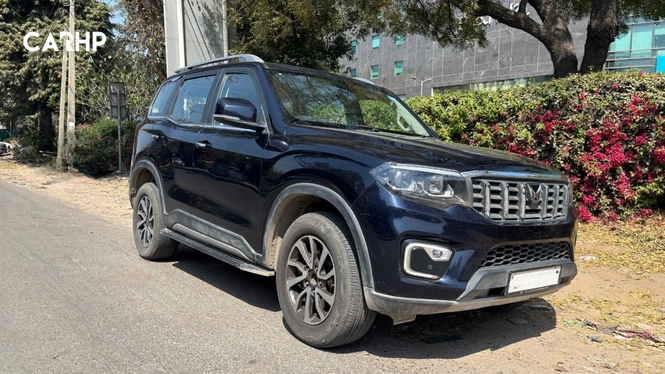
Once the soot mass threshold accumulates over 20 grams, the DPF lamp is illuminated. There are three stages to this.
Stage 1 – The first is warning. The DPF lamp just comes on and requires passive or manual regeneration. In this process, the owner has to run the car in an open area, put the car in neutral, and raise the RPM for 20–30 minutes until the light clears. How this works is the raised RPM increases exhaust gas temperature, which helps burn the particles in the DPF.
Stage 2 – Then comes the second or blinking warning light, giving the customer final warning to perform manual regeneration before the OBD lamp kicks on at the third stage, also called limp mode.
Stage 3 – It's called Limp Mode. In this state, the car’s OBD lamp glows and the car is limited to just 40 kmph, and now you have to take it to the nearest service center as soon as possible.
Now, once you take your diesel car to the nearest Mahindra service center, there are two possibilities as per official Mahindra technical manager Pawan, who works at a Mahindra service center in Uttarakhand. He mentioned that what they do once the diesel car is in the workshop due to limp mode, they check the mass of soot in the DPF. If it’s below 37 grams, regeneration is still possible.
If not, they have to check the differential pressure sensors (it’s not the wheel differential; this sensor essentially measures two specific points in a system rather than against atmospheric pressure, used extensively for monitoring filter blockage, flow rates of liquids/gases) Here there are 2 possibilities
Number 1: If the pressure sensor indicates a value below 200 hPa, they can reset the vehicle using their OBD console, provided nothing else is wrong with the car and all other sensor values are OK.
Number 2: If the pressure is above 200, it requires manual DPF cleaning from an authorised workshop.
They did not mention the cost, but I saw estimates ranging from 8000–10000 at local mechanic shop in Gurgaon for DPF cleaning.
What Can You Do To Prevent DPF Issues?
So all this happens if you are driving a diesel car in heavy city traffic for 20–300 km, at which point 20 grams of soot mass can easily accumulate, prompting the regen light to come on and you to perform a manual or parked regeneration.
However, both technical managers at Mahindra in this video agreed that to avoid this, you have to make sure that the car in question is serviced regularly, you buy fuel from trusted outlets, your air intake system is cleaned, and most importantly, the car is driven at highway speeds or 60 kmph for at least 20–30 minutes periodically so that automatic regeneration can happen.
Also Read- Common Thar Problems We Would Like To See Fixed In Its Upcoming Facelift
They also mentioned that cleaning DPF filters at 50,000 km is a common misconception if your driving behavior aligns with vehicle guidelines. As per them, there were quite a few cases in which the cars were running just fine even after crossing 100,000 km without any DPF cleaning.
Source- All this information was provided by an official Mahindra technical manager In an Interview with DDS.
Write a comment
Comments
No comments yet. Be the first to comment!
Trending
Here is How Much Petrol, Diesel And CNG Prices Have Gone Up Since May
India's Sudden Fuel Price Hike Explained
Salil Kumar
May 26, 2026

Petrol and Diesel Prices Increased By Rs 3 Per Litre - Check City-Wise Rates
This marks the first major price revision in four years.
Arjun Nair
May 15, 2026

Featured
Citroen C3 Review: Who Should Consider This Car?
A few days ago, I took the Citroen C3X out for a spin in the city and on the highways. I travelled long distances and checked its fuel efficiency, features, comfort, and other factors. Today, I’ll briefly share my overall experience with the C3X and will tell you whether you should consider it or not and which is the most value-for-money variant of the lot.
Vatsal Agrawal
May 19, 2026
Tesla Finally In India Officially. Why Now And What Does It Mean For EVs?
The much-anticipated 2025 Tesla Model Y has officially arrived in India, marking a pivotal moment for the nation's burgeoning electric vehicle market. Launched on July 15, 2025, the Model Y Juniper facelift offers cutting-edge technology, impressive range, and signature Tesla performance. Positioned as a premium electric SUV, its entry will intensify competition and reshape consumer expectations for EVs across the subcontinent.
Charan Narain
July 17, 2025

Here Are 10 Things The Harrier.EV Offers That The Mahindra XEV 9E Doesn't
The Harrier.EV is an incredible new offer from Tata. Its most popular competitor would be the Mahindra XEV 9E, priced similarly. With these two incredible offerings from home grown brands available, here is a list of everything the Harrier.EV offers that the XEV 9E doesn't.
Charan Narain
June 13, 2025