How to Check Petrol-Ethanol Mix at Home Using a Graduated Cylinder
By Salil Kumar
Published February 23, 2026
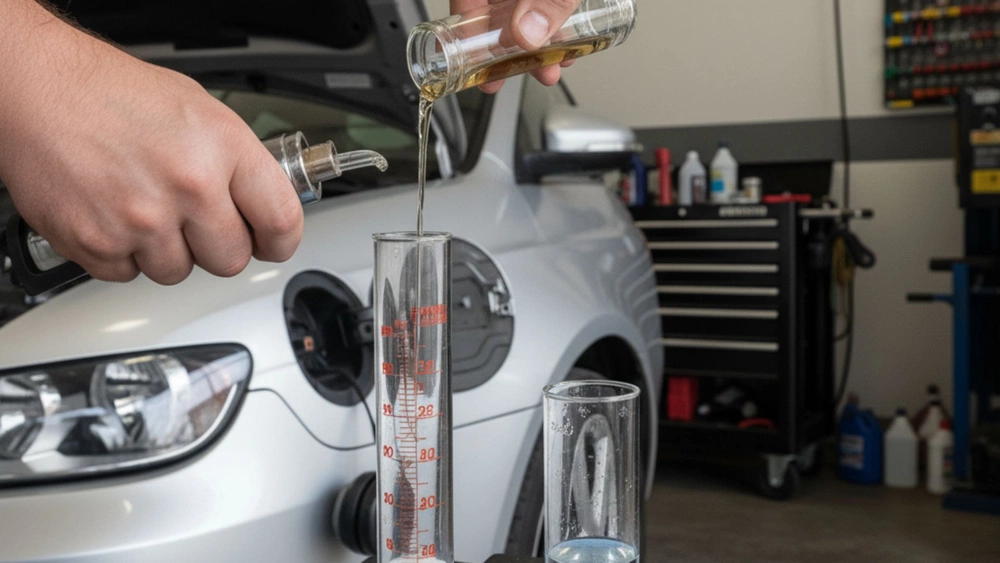
Our government's move to E20 petrol a blend of 20% ethanol and 80% petrol— s a significant step toward reducing pollution and oil imports. However, many car owners, particularly those with vehicles not compliant with this fuel, are concerned about potential issues like reduced mileage, lower performance, and long-term engine wear. This has led to concerns about whether the ethanol content is truly as advertised or potentially higher.
Fortunately, you can perform a simple and effective test at home using just a graduated cylinder and water to check the ethanol percentage in your fuel.
The Science Behind the Test
This test works on a simple principle: ethanol mixes with water, but petrol does not. When you add a fuel sample to water, any ethanol in the mixture will separate from the petrol and combine with the water. By measuring the increase in the water's volume, you can accurately determine the amount of ethanol that was in the fuel.
Step-by-Step Guide to the DIY Ethanol Test
Follow these steps carefully to ensure a reliable result.
1. Gather Your Materials
- A graduated cylinder: A clear, vertical measuring tube with markings. A 100 ml size is ideal for this test. There are plenty available form Flipkart and Amazon
- Water: Distilled water is best, but clean tap water will also work.
- Fuel sample: A small sample of petrol from the fuel station you want to test. you can also siphon some off from your fuel tank using plastic ladle.
2. Prepare the Cylinder
Start by pouring exactly 10 ml of water into the graduated cylinder. Note this initial level. The water will form the base layer.
3. Add the Fuel
Slowly and carefully pour 90 ml of your petrol sample into the same cylinder. The total volume of liquid should now be 100 ml. You will see two distinct layers: the water at the bottom and the lighter petrol floating on top.
4. Mix the Liquids
Close the top of the cylinder with a stopper or securely cover it with your thumb. Gently shake the cylinder for a few seconds. This action helps the ethanol molecules in the petrol move into and mix with the water.
5. Let It Settle
Place the cylinder on a flat, stable surface and let it sit undisturbed for 5 to 10 minutes. This allows the liquids to fully separate into two clear layers: the water-ethanol mix at the bottom and the pure petrol on top.
6. Read the New Water Level
After the liquids have separated, observe the new water level at the bottom. For example, if the level has risen from 10 ml to 28 ml, it means that 18 ml of ethanol has mixed with the water.
7. Calculate the Ethanol Percentage
To find the percentage of ethanol in your fuel, use this simple formula:
Using our example:
This result indicates that the fuel is indeed E20 petrol.
Important Safety Precautions
- Work in a well-ventilated area. Always perform this test outdoors or in an open space to avoid inhaling petrol fumes.
- Stay away from flames or sparks. Petrol is highly flammable. Keep all sources of ignition, including cigarettes, lighters, and open flames, far away from your test area.
- Do not reuse the tested fuel. The petrol sample you used is now contaminated with water. Do not pour it back into your vehicle's tank. Dispose of it safely and responsibly.
- This is a home test, not a professional lab analysis. While this method is a reliable way to check for significant discrepancies in ethanol content, it is not a substitute for a precise, laboratory-grade measurement
Write a comment
Comments
No comments yet. Be the first to comment!
Trending
Here is How Much Petrol, Diesel And CNG Prices Have Gone Up Since May
India's Sudden Fuel Price Hike Explained
Salil Kumar
May 26, 2026

Diesel Cars DPF Issues And How To Solve Them As Per Experts
Mahindra Diesel Cars DPF Problems Explained
Salil Kumar
May 18, 2026

Featured
Citroen C3 Review: Who Should Consider This Car?
A few days ago, I took the Citroen C3X out for a spin in the city and on the highways. I travelled long distances and checked its fuel efficiency, features, comfort, and other factors. Today, I’ll briefly share my overall experience with the C3X and will tell you whether you should consider it or not and which is the most value-for-money variant of the lot.
Vatsal Agrawal
May 19, 2026

Tesla Finally In India Officially. Why Now And What Does It Mean For EVs?
The much-anticipated 2025 Tesla Model Y has officially arrived in India, marking a pivotal moment for the nation's burgeoning electric vehicle market. Launched on July 15, 2025, the Model Y Juniper facelift offers cutting-edge technology, impressive range, and signature Tesla performance. Positioned as a premium electric SUV, its entry will intensify competition and reshape consumer expectations for EVs across the subcontinent.
Charan Narain
July 17, 2025
Here Are 10 Things The Harrier.EV Offers That The Mahindra XEV 9E Doesn't
The Harrier.EV is an incredible new offer from Tata. Its most popular competitor would be the Mahindra XEV 9E, priced similarly. With these two incredible offerings from home grown brands available, here is a list of everything the Harrier.EV offers that the XEV 9E doesn't.
Charan Narain
June 13, 2025