
EMI Loading
Ampere Electric Magnus Neo Key Specifications
Ampere Electric Magnus Neo Variants & Prices
| Variant Details | Ex. Showroom Price | |
|---|---|---|
Magnus Neo STD65 km/Hr | 85 km/charge | 6 Hr | ₹ 86,999* |
Magnus Neo STD
Pros & Cons of Ampere Electric Magnus Neo
Things We Like
- Thermally safe and durable LFP battery chemistry enhances long-term reliability.
- Spacious 22-litre underseat storage is highly practical for daily use.
Things We Don't Like
- Drum brakes on both wheels offer only adequate stopping power.
- Top speed is limited to around 53 km/h, restricting its usability.
Ampere Electric Magnus Neo Overview

Battery and Motor
Battery and Motor
The Magnus Neo is powered by a hub-mounted BLDC motor with a peak power output of 2.8 kW. This is paired with a 3 kWh LFP (Lithium Iron Phosphate) battery pack, a significant choice in this segment. On paper, Ampere claims a certified range exceeding 100 km per charge. However, in real-world urban commuting conditions, a more realistic expectation would be between 80 and 90 km, which is adequate for most daily use cases.
The scooter offers two riding modes: Eco and Power. In Eco mode, throttle response is muted and top speed is restricted to conserve energy, making it suitable for dense, slow-moving traffic. Power mode unlocks the scooter's full potential, delivering a top speed of approximately 53 km/h.
The initial acceleration is brisk and silent, characteristic of electric powertrains, allowing for quick starts from traffic lights. However, the performance tapers off significantly past 40 km/h. This is not a scooter for open roads or highways; its powertrain is calibrated exclusively for intra-city mobility. The 6-7 hour charging time using a standard 5A socket is on the longer side, necessitating overnight charging routines.
posture comfort
posture comfort
Practicality is where the Magnus Neo makes a strong case for itself. The scooter features a long, wide, and well-cushioned seat that offers ample space for both the rider and a pillion. The riding posture is upright and neutral, with an accessible seat height that allows most riders to place their feet firmly on the ground. This ergonomic setup is conducive to comfortable city commuting without causing fatigue over short distances.
For the pillion, a sturdy grab rail and conveniently positioned footpegs enhance comfort and security. The scooter's most practical asset is its underseat storage capacity. At 22 litres, it is one of the more spacious boots in its class, capable of holding a half-face helmet, a small bag, or daily groceries with ease.
This is complemented by a small glovebox in the front apron for storing a phone or wallet. Furthermore, the wide and flat floorboard is a significant advantage in the Indian context, allowing users to carry bulky items or bags between their feet, a common requirement for daily errands. Heat management is a non-issue due to the electric powertrain, ensuring a comfortable ride even in stop-and-go traffic.
handling ride quality
handling ride quality
The Magnus Neo is built on a conventional underbone frame, suspended by a telescopic fork at the front and twin shock absorbers at the rear. This is a standard and proven setup in the scooter segment, and its implementation here is clearly tuned for comfort. The suspension effectively absorbs minor road imperfections, undulations, and broken tarmac typical of Indian city streets, providing a compliant ride at speeds below 40 km/h. However, larger, sharp-edged potholes can unsettle the chassis, sending a noticeable jolt to the rider. In terms of handling, its lightweight construction and compact dimensions make it highly agile and easy to manoeuvre through congested traffic. The scooter feels nimble when filtering between vehicles. Stability at its top speed of around 50 km/h is acceptable, but it does not inspire the same level of confidence as heavier rivals with larger 12-inch wheels.
The most significant compromise is its braking hardware. The Magnus Neo employs 130mm drum brakes on both the front and rear wheels, equipped with a Combined Braking System (CBS). While CBS is a mandatory safety aid, the absence of a front disc brake is a notable cost-cutting measure that puts it behind competitors like the base TVS iQube, which offers a front disc for superior braking feedback and performance, especially in wet conditions.
design
design
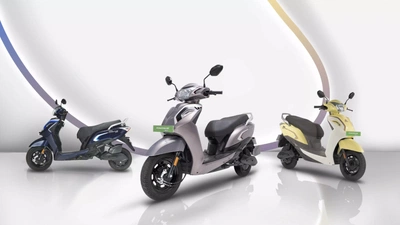
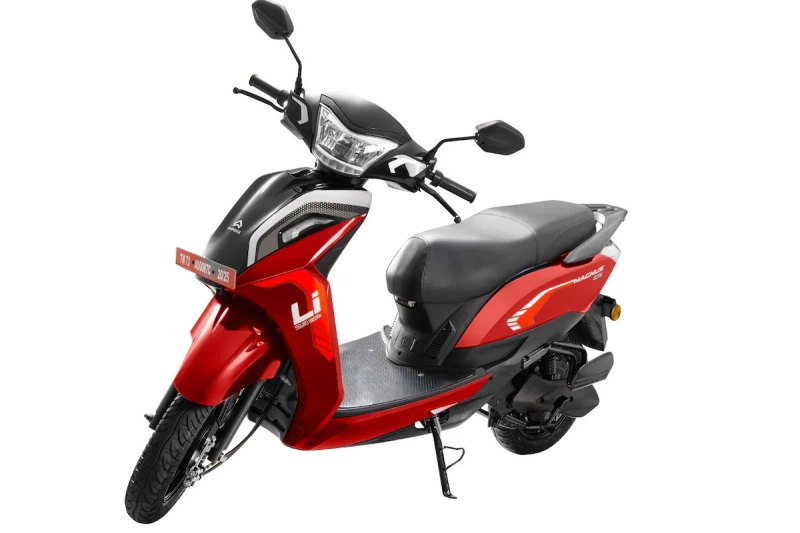
Visually, the Ampere Magnus Neo adopts a conservative and functional design ethos aimed at mass-market appeal. The styling is neutral, with flowing body panels and a familiar scooter silhouette that will not offend any aesthetic sensibilities. It is designed to be a practical family vehicle rather than a style statement. The lighting system is a modern touch, featuring a full-LED headlamp and tail lamp that enhance visibility and lend a contemporary look. The instrument cluster is a basic, fully digital LCD unit that displays essential information such as speed, battery state of charge, odometer, and selected ride mode. It is legible but lacks the sophistication of the colour displays seen on competitors. In terms of equipment, the Magnus Neo focuses on utility over technology.
Key features include a USB charging port located in the front apron for charging mobile devices, a side-stand sensor that prevents the motor from engaging when the stand is down, and ample floorboard space. What is conspicuously absent is any form of smart connectivity. There is no Bluetooth, no dedicated smartphone app for telematics, and no turn-by-turn navigation, features that are increasingly becoming standard in the electric scooter segment, even at this price point.
safety
safety
The safety suite on the Ampere Magnus Neo is functional but basic, meeting the mandatory regulatory requirements. The primary safety system is the Combined Braking System (CBS) paired with drum brakes on both wheels. CBS automatically applies a portion of the front brake when the rear brake is used, helping to balance the scooter during deceleration and reducing the chances of a rear-wheel skid, which is particularly useful for novice riders.
However, the inherent limitations of drum brakes mean that braking performance, while adequate for its 50 km/h top speed, lacks the bite and progressive feel of a front disc brake setup. This difference becomes more pronounced in wet conditions, where disc brakes offer more consistent and reliable stopping power.
A crucial safety feature included is the side-stand motor cut-off, which prevents accidental throttle input while the scooter is parked. Visibility is addressed by the full-LED headlamp and tail lamp, which make the scooter more conspicuous to other road users. From a battery perspective, the use of LFP chemistry is a significant safety advantage. LFP cells are known for their superior thermal stability and are less prone to thermal runaway compared to NMC (Nickel Manganese Cobalt) cells used by some competitors, offering an added layer of safety and peace of mind.
competition
competition
Ola S1 X+:
The Ola S1 X+ is a direct rival that focuses on technology and performance. It offers a higher top speed of 90 km/h and a more feature-rich experience with its large touchscreen display and MoveOS software. Its key differentiator is its superior performance envelope and tech-forward approach, appealing to younger, tech-savvy buyers who prioritise speed and connectivity over traditional practicality.
TVS iQube (Base Variant):
The TVS iQube competes on the grounds of build quality, refinement, and brand trust. Even in its base form, it feels robustly engineered and offers a more planted and premium ride experience. Its primary differentiator is the backing of TVS's vast service network and a proven track record for reliability, making it the choice for buyers prioritising peace of mind and long-term ownership.
Ather 450S:
The Ather 450S represents the enthusiast's choice in the entry-level premium segment. It boasts a sophisticated chassis, superior ride dynamics, and a more engaging riding experience. Its differentiator is its sharp handling and premium ecosystem, including the Ather Grid charging network, catering to buyers who value a sporty ride and are willing to pay a slight premium for it.
buying advice
buying advice
Who should buy it?
The Ampere Magnus Neo is ideal for the pragmatic commuter or small family seeking a no-frills, reliable electric scooter for city errands. Buyers who prioritise a safe LFP battery, ample storage, and a comfortable ride over high-tech features and outright speed will find it a compelling option.
Who should skip it?
Riders who require a top speed of over 60 km/h for arterial roads, desire smart features like navigation and app connectivity, or demand the superior safety of disc brakes should look elsewhere. The Magnus Neo's basic performance and feature set will feel inadequate for them.
Ampere Electric Magnus Neo Specifications & Features
Engine & Transmission
| Motor Power | 2.4 kW |
| Starting | Push Button Start |
| Number of Batteries | |
| Valve Per Cylinder | |
| Range Eco Mode | 118 km/charge km/Charge |
| Paddle |
Motor & Battery
| Drive Type | Hub Motor |
| Battery Type | LFP |
| Reverse Assist | |
| Transmission | Automatic |
| Peak Power | 2.4 kW |
| Motor Type | BLDC |
| Battery Warranty | 5 Years or 75,000 Km |
| Motor Warranty | 3 Year |
| Swappable Battery | |
| Torque Wheel | NaN PS |
| Water Proof Rating | IP67 Battery |
Mileage & Performance
| zero to 40 kmph | 6.50 s |
Performance
| Top Speed | 65 kmph |
| Scooter Speed | high |
| average speed |
Chassis & Suspension
| Body Type | Electric Scooters |
Tyres & Brakes
| Front Brake Diameter | 130 mm |
| Rear Brake Diameter | 130 mm |
| Radial Tyre |
Dimensions & Capacity
| Additional Storage | 22 L |
| Width | 690 mm |
| Length | 1915 mm |
| Height | 1260 mm |
| Ground Clearance | 165 mm |
| Wheelbase | 1390 mm |
| Kerb Weight | 108 Kg |
| Load Carrying Capacity | 150 Kg |
| pillion grab rail | |
| pillion seat |
Electricals
| Headlight | LED |
| Taillight | Bulb |
| Turn Signal Lamp | LED |
| Low Battery Indicator | |
| Projector Headlights | |
| Low Oil Indicator | |
| Low Fuel Indicator | |
| Pilot Lamps | |
| Drls |
Features & Safety
| Additional Features |
|
| Display | |
| Riding Modes | |
| Traction Control | |
| Power Modes | |
| Launch Control | |
| Quick Shifter | |
| Adjustable Windscreen | |
| Engine Kill Switch | |
| Central Locking | |
| Real Time Mileage Indicator | |
| Service Due Indicator | |
| Switchable ABS | |
| Engine Immobilizer | |
| Gradeability | 12° |
| EBS | |
| Shutter Lock | |
| Internet Connectivity | |
| Airbag | |
| Fast Charging | |
| External Fuel Filling | |
| Seat Opening Switch | |
| I3S Technology | |
| Telematics | |
| Artificial Intelligence | |
| exhaust heat shield | |
| hazard warning indicator | |
| hazard warning lights | |
| high beam indicator | |
| malfunction indicator | |
| no of tripmeters | - |
| saree guard | |
| shift light | |
| stand alarm | |
| vehicle location tracking |
App Features
| Low Battery Alert | |
| Navigation Assist | |
| Calls & Messaging | |
| Geo Fencing | |
| Charging Station Locater |
Charging Features
| Charging at Home | |
| Charging at Charging Station | |
| Charging Time 0-80 | 5 hrs |
| Charging Network or Battery Swapping Network |
Underpinnings
| Suspension Front | Hydraulic Telescopic |
| Suspension Rear | Dual Shock |
| Brakes Front | Drum |
| Brakes Rear | Drum |
| Tyre Size | Front :-90/90-12 Rear :-90/90-12 |
| Wheel Size | Front :-304.8 mm,Rear :-304.8 mm |
| Tubeless Tyre | Tubeless |
| Frame | High Strength Dual Steel Frame |
| Tyre Type | Tubeless |
Warranty
| Mobile Application | |
| Vehicle Warranty | 3 Years or 30,000 Km |
| Roadside Assistance |
Ampere Electric Magnus Neo Price in Cities
₹ 0.89 Lakh - 0.89 Lakh
₹ 0.89 Lakh - 0.89 Lakh
₹ 0.89 Lakh - 0.89 Lakh
₹ 0.89 Lakh - 0.89 Lakh
₹ 0.90 Lakh - 0.90 Lakh
₹ 0.89 Lakh - 0.89 Lakh
₹ 0.89 Lakh - 0.89 Lakh
₹ 0.94 Lakh - 0.94 Lakh
₹ 0.89 Lakh - 0.89 Lakh
₹ 0.89 Lakh - 0.89 Lakh