
EMI Loading
AMO Electric Brisk Key Specifications
AMO Electric Brisk Variants & Prices
| Variant Details | Ex. Showroom Price | |
|---|---|---|
Brisk STD25 km/Hr | 75-100 km/charge | 6 Hr | ₹ 62,913* |
Brisk STD
AMO Electric Brisk Comparison with similar Bikes
Pros & Cons of AMO Electric Brisk
Things We Like
- No registration or driving license required for operation.
- Extremely low running and maintenance costs per kilometre.
Things We Don't Like
- Strictly limited to a top speed of 25 km/h.
- Performance struggles significantly on inclines and with a pillion.
AMO Electric Brisk Overview

Battery and Motor
Battery and Motor
The AMO Brisk is powered by a 249-watt Brushless DC (BLDC) hub motor, a specification that legally classifies it as a low-speed electric vehicle. This classification is its defining performance characteristic, as it caps the top speed at 25 km/h. Consequently, discussions of acceleration and highway performance are moot; its operational theatre is strictly limited to low-density city roads and last-mile connectivity.
The scooter is offered with two battery choices: a 60V/27Ah lead-acid variant and a more contemporary 60V/27Ah lithium-ion option. The choice significantly impacts ownership. The lead-acid version, while more affordable upfront, requires a charging time of 6-8 hours and has a shorter lifespan.
In contrast, the lithium-ion battery charges in a more practical 3-4 hours and offers better longevity and a lower kerb weight. The claimed range is between 75-100 km, but a realistic real-world figure under normal riding conditions (single rider, mixed traffic) would be closer to 60-70 km for the lithium-ion variant. Throttle response is calibrated to be gentle and non-intimidating, prioritising smooth power delivery over quickness. The motor delivers just enough torque for flat-road commuting but visibly labours on steep inclines, especially with a pillion.
posture comfort
posture comfort
Comfort and practicality are central to the Brisk's proposition. The riding posture is upright and neutral, with an easily accessible handlebar and a flat, spacious floorboard. This relaxed ergonomics makes it suitable for riders of various heights and reduces fatigue during short city hops. The seat is a single-piece unit, designed to be broad and adequately cushioned for both the rider and a pillion. While comfortable for solo rides, the scooter's limited motor power means pillion comfort is best reserved for very short distances on level ground.
At 770mm, the seat height is accessible for most Indian riders. A key practical advantage is the flat floorboard, which is invaluable for carrying groceries or a small bag between the feet. Underseat storage is modest; it can accommodate a half-face helmet or small personal items but will not fit a standard full-face helmet. There is also a small, non-lockable storage pocket in the front apron, ideal for holding a phone while it charges via the adjacent USB port. A sturdy grab rail at the rear provides support for the pillion and serves as a mounting point for light luggage.
handling ride quality
handling ride quality
The Brisk employs a conventional underbone frame suspended by telescopic front forks and a spring-based hydraulic shock absorber at the rear. This setup is tuned entirely for low-speed ride comfort. Within its 25 km/h operating speed, the suspension does a competent job of absorbing minor road imperfections, speed bumps, and potholes typically encountered in urban environments.
The ride is pliable and focused on insulating the rider from surface irregularities rather than providing dynamic feedback. Handling is characterised by agility, a direct result of its low kerb weight (especially the lithium-ion model) and compact dimensions. This makes it exceptionally easy to navigate through congested traffic, execute tight U-turns, and maneuver into difficult parking spots. Stability is adequate for its speed limit, but it is not engineered for high-speed dynamics.
Braking duties are handled by 130mm drum brakes on both the front and rear wheels, governed by an Electronic-Assisted Braking System (E-ABS), which functions as a Combi-Brake System (CBS). This system lacks the bite and progressive feel of a front disc brake—a cost-saving measure common in this segment. While the braking is sufficient to bring the scooter to a halt from 25 km/h, it requires a deliberate and firm pull on the levers.
design
design
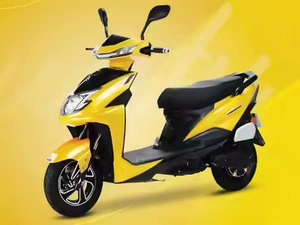
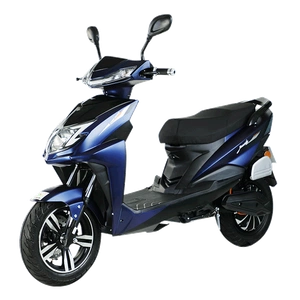
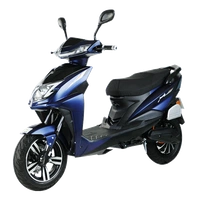
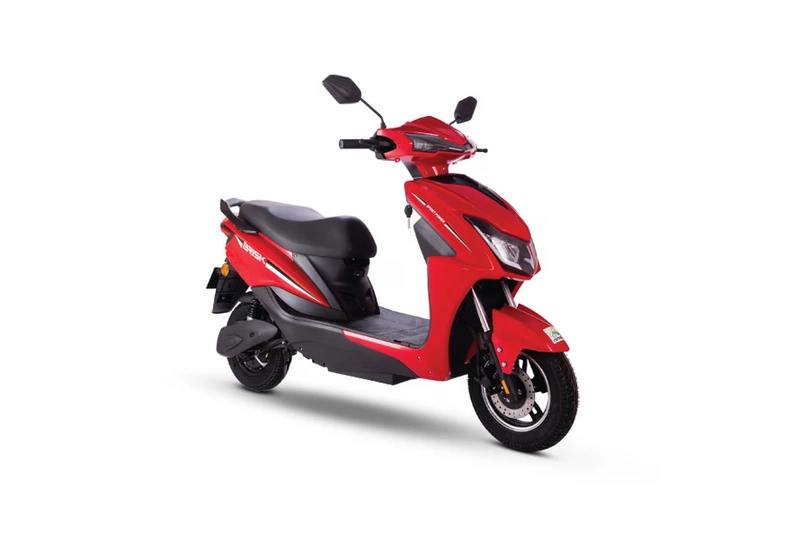
Visually, the AMO Brisk follows a familiar, conservative scooter design template. The styling is functional rather than aspirational, featuring a broad front apron with integrated indicators and a handlebar-mounted headlamp cowl. Build quality and panel gaps are consistent with its price point. The scooter is equipped with a basic, fully digital instrument cluster that provides essential information: a speedometer, battery charge level, odometer, and trip meter. It foregoes advanced connectivity features like Bluetooth or turn-by-turn navigation, focusing instead on core utility.
The feature list is practical. It includes a USB charging port located in the front apron storage area, allowing riders to charge their mobile devices on the move. An anti-theft alarm system with a motor lock function provides a necessary layer of security. The inclusion of a side-stand sensor, which prevents the scooter from starting when the stand is engaged, is a crucial safety feature. It also gets a pass-light switch and alloy wheels with tubeless tyres, which add a degree of convenience and safety by preventing sudden deflation in case of a puncture. These features, while not headline-grabbing, are genuinely useful for the target user's daily routine.
safety
safety
The safety suite on the AMO Brisk is rudimentary, reflecting its low-speed classification and budget positioning. The primary safety system is the Electronic-Assisted Braking System (E-ABS), which is essentially a Combi-Brake System (CBS). When the rear brake lever is applied, it also partially actuates the front brake, helping to balance braking forces and reduce stopping distances, particularly for novice riders.
However, it is crucial to understand that this is not the anti-lock braking system (ABS) found on higher-performance two-wheelers and will not prevent wheel lock-up under panic braking on loose surfaces.
The braking hardware itself consists of drum brakes at both ends, which offer predictable but not powerful performance. Safety is further enhanced by the mandatory side-stand cut-off sensor. For visibility, the Brisk typically uses a halogen headlamp, which provides adequate illumination for low-speed city riding but lacks the intensity and spread of the LED units found on more premium scooters. The LED tail lamp and indicators, however, offer good visibility to other road users. The anti-theft alarm with motor lock adds a layer of passive security when the vehicle is parked.
competition
competition
The low-speed electric scooter market is populated with several established alternatives, each with a distinct appeal.
Hero Electric Flash:
A direct rival from India's largest electric two-wheeler manufacturer. The Flash offers similar specifications—a 250W motor, 25 km/h top speed, and lead-acid/lithium-ion options. Its key differentiator is Hero Electric's vast sales and service network, providing potential buyers with greater peace of mind regarding after-sales support.
Okinawa R30:
Okinawa has a strong presence in the budget EV space. The R30 features a 250W motor, a detachable 1.34 kWh lithium-ion battery, and a claimed range of around 60 km. Its primary differentiator is its more contemporary styling and the practicality of a removable battery, which allows for convenient indoor charging.
Ampere Reo Li Plus:
Backed by Greaves Cotton, Ampere offers the Reo Li Plus as a reliable city commuter. It matches the Brisk with a 25 km/h top speed and a lithium-ion battery offering around 60 km of range. Its main differentiator lies in its brand perception for reliability and a suspension setup that is often cited as being slightly better tuned for ride comfort.
buying advice
buying advice
Who should buy it?
The AMO Brisk is ideal for individuals seeking a no-frills, license-free, and extremely low-cost vehicle for predictable, short-distance (5-15 km) daily commutes within a city or locality. Students, senior citizens, and local business owners will find its simplicity appealing.
Who should skip it?
Riders who need to travel on main roads with faster-moving traffic, require a range of over 50 km per day, frequently carry a pillion, or live in a hilly area should look at high-speed electric scooters or conventional petrol models.
AMO Electric Brisk Specifications & Features
Engine & Transmission
| Motor Power | 0.25 kW |
| Starting | Push Button Start |
| Number of Batteries |
Motor & Battery
| Battery Type | Lead Acid |
| Reverse Assist | |
| Transmission | Automatic |
| Motor Type | Brushless DC |
| Battery Warranty | 1 Year |
| Swappable Battery |
Performance
| Top Speed | 25 kmph |
| Scooter Speed | high |
| average speed |
Chassis & Suspension
| Body Type | Electric Scooters |
Dimensions & Capacity
| Width | 700 mm |
| Length | 1960 mm |
| Height | 700 mm |
| Saddle Height | 740 |
| Ground Clearance | 180 mm |
| Kerb Weight | 62 Kg |
| Load Carrying Capacity | 230 Kg |
| Total Weight | 230 Kg |
| pillion grab rail | |
| pillion seat |
Electricals
| Headlight | LED |
| Taillight | Bulb |
| Turn Signal Lamp | Bulb |
| Low Battery Indicator | |
| Projector Headlights | |
| Low Oil Indicator | |
| Low Fuel Indicator | |
| Pilot Lamps | |
| Drls |
Features & Safety
| Additional Features |
|
| Display | |
| Traction Control | |
| Power Modes | |
| Launch Control | |
| Quick Shifter | |
| Adjustable Windscreen | |
| Engine Kill Switch | |
| Central Locking | |
| Real Time Mileage Indicator | |
| Service Due Indicator | |
| Switchable ABS | |
| Engine Immobilizer | |
| Gradeability | 18° |
| EBS | |
| Shutter Lock | |
| Internet Connectivity | |
| Airbag | |
| Fast Charging | |
| External Fuel Filling | |
| Seat Opening Switch | |
| I3S Technology | |
| Telematics | |
| Artificial Intelligence | |
| exhaust heat shield | |
| hazard warning indicator | |
| hazard warning lights | |
| high beam indicator | |
| malfunction indicator | |
| no of tripmeters | - |
| saree guard | |
| shift light | |
| stand alarm | |
| vehicle location tracking |
App Features
| Low Battery Alert | |
| Navigation Assist | |
| Calls & Messaging | |
| Geo Fencing | |
| Charging Station Locater |
Charging Features
| Charging at Home | |
| Charging at Charging Station | |
| Charging Network or Battery Swapping Network | |
| Charging Time 0-100 | 6 hours |
Underpinnings
| Suspension Front | Telescopic Fork |
| Suspension Rear | Spring Loaded Gas |
| Brakes Front | Drum |
| Brakes Rear | Drum |
| Tyre Size | Front :-3.00-10, Rear :- 3.00-10 |
| Wheel Size | Front :-254 mm,Rear :-254 mm |
| Tubeless Tyre | Tubeless |
| Frame | High Rigid Tubular Frame |
| Tyre Type | Tubeless |
Warranty
| Mobile Application | |
| Vehicle Warranty | 3 Years or 30,000 Km |
| Roadside Assistance |
AMO Electric Brisk Price in Cities
₹ 0.66 Lakh - 0.66 Lakh
₹ 0.66 Lakh - 0.66 Lakh
₹ 0.66 Lakh - 0.66 Lakh
₹ 0.66 Lakh - 0.66 Lakh
₹ 0.67 Lakh - 0.67 Lakh
₹ 0.66 Lakh - 0.66 Lakh
₹ 0.66 Lakh - 0.66 Lakh
₹ 0.69 Lakh - 0.69 Lakh
₹ 0.66 Lakh - 0.66 Lakh
₹ 0.66 Lakh - 0.66 Lakh